
Sacred Varanasi Tour explores the 10 best ghats of Varanasi — Dashashwamedh, Manikarnika, Assi and more, with a walking route and visitor etiquette.
Ghats of Varanasi: 10 Best Sacred Steps You Must See in 2026
Stand anywhere on the riverfront at Varanasi and you are standing on one of the ghats of Varanasi — broad stone staircases descending to the Ganga, running in an unbroken crescent for close to seven kilometres. According to Wikipedia’s list of ghats in Varanasi, there are close to 84 of them, a number rooted in Hindu cosmology’s 84 lakh species of transmigration.
Each of the ghats of Varanasi has a name, a story and a distinct character. Here are the 10 you should not miss, in the order you’d encounter them.
What Exactly Is a Ghat?
A ghat is a flight of steps leading to a body of water. Across the ghats of Varanasi, they serve as bathing places, cremation grounds, laundry yards, wrestling akharas and, in the early morning, the city’s living room. Most were built or rebuilt in the 18th and 19th centuries by Maratha rulers and Rajput princes.
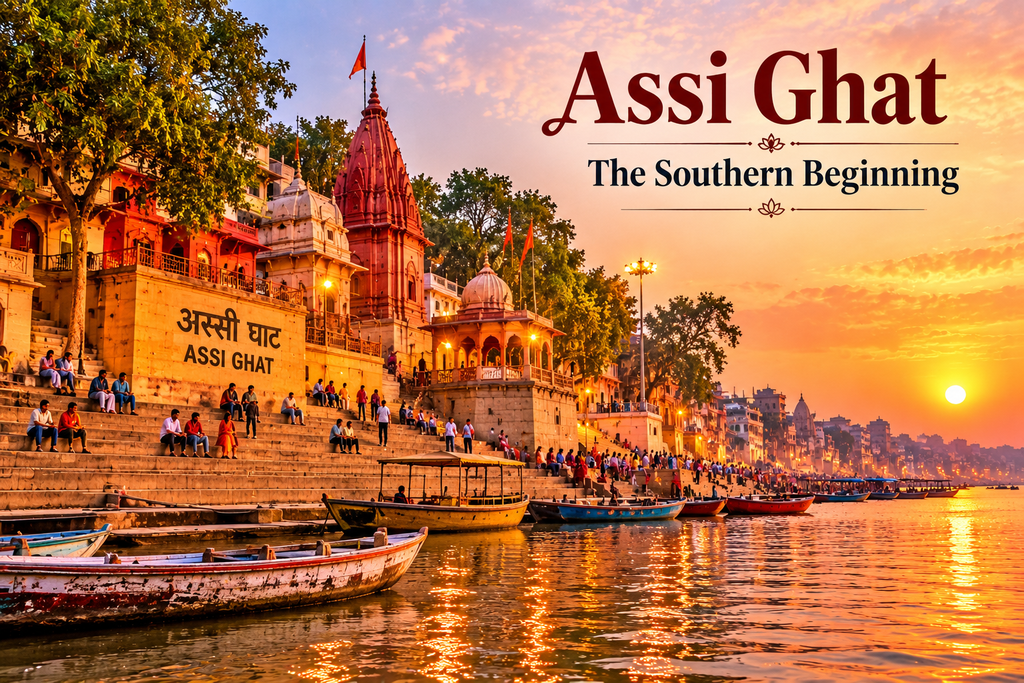
1. Assi Ghat — The Southern Beginning
The southernmost major ghat among the ghats of Varanasi. The Subah-e-Banaras programme runs here daily from 5:00–5:30 AM — Vedic chanting, morning Ganga Aarti, yoga and ragas at sunrise.
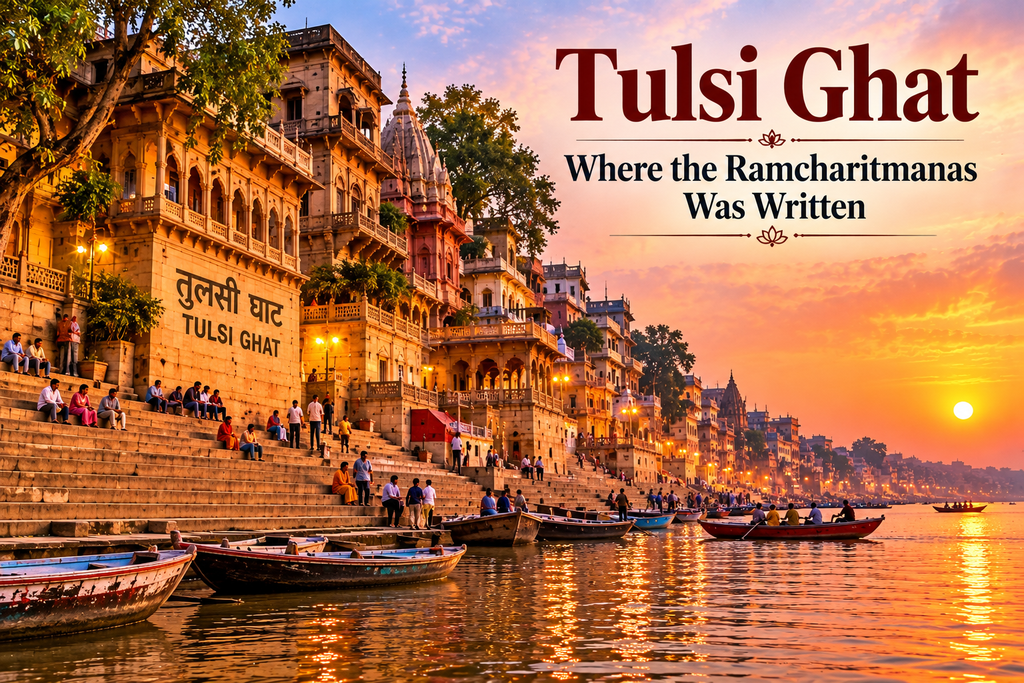
2. Tulsi Ghat — Where the Ramcharitmanas Was Written
Named for the poet-saint Tulsidas, who composed much of the Ramcharitmanas here.
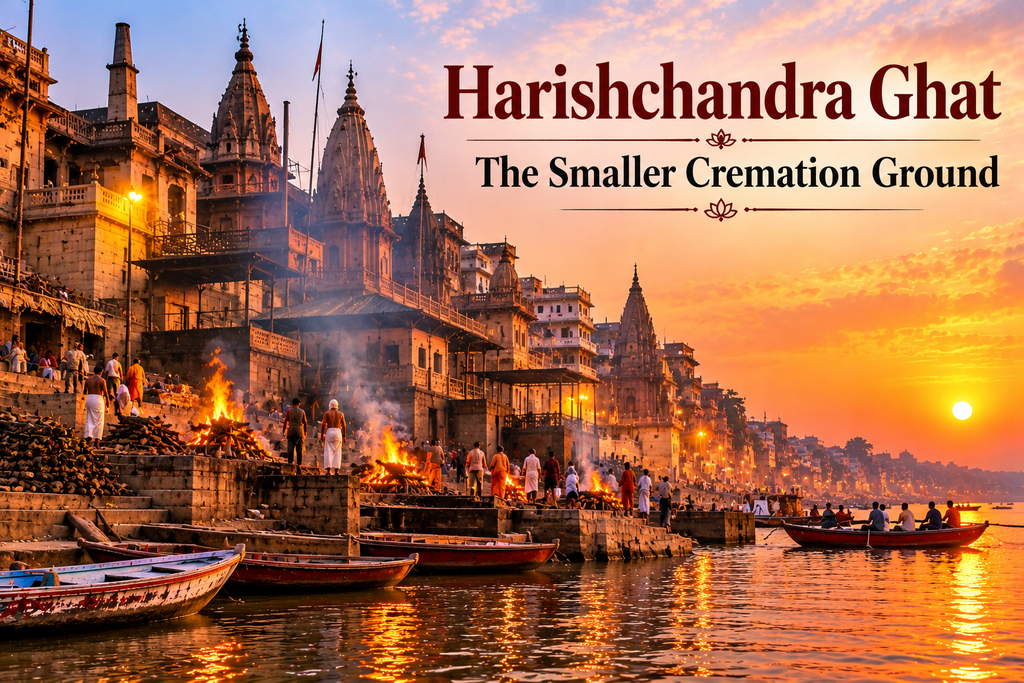
3. Harishchandra Ghat — The Smaller Cremation Ground
One of two cremation ghats among the ghats of Varanasi. No photography.
4. Kedar Ghat — Colour and South Indian Devotion
Instantly recognisable red-and-white striped steps, drawing a large Bengali and South Indian congregation.

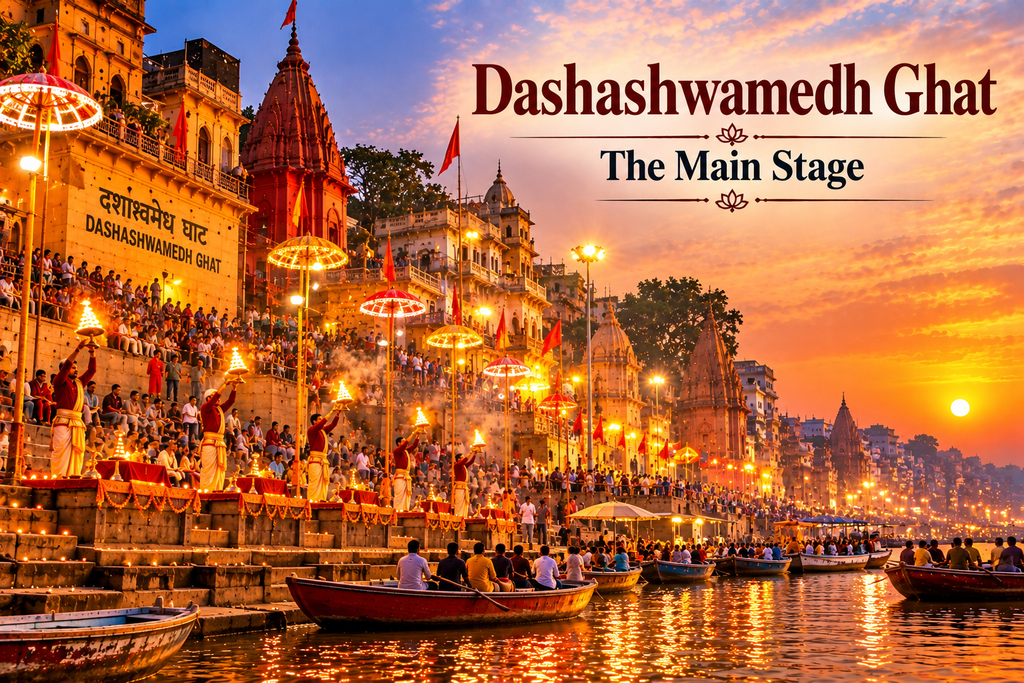
5. Dashashwamedh Ghat — The Main Stage
The busiest of all the ghats of Varanasi, hosting the grand evening Ganga Aarti. See exact timings in our Ganga Aarti Varanasi Timings 2026 guide.
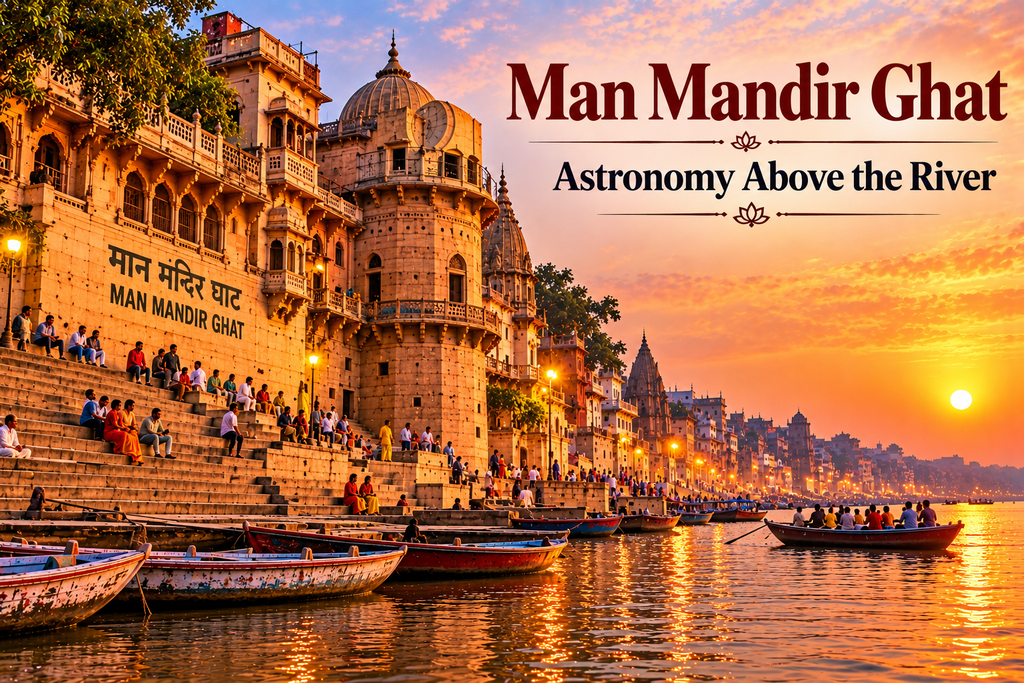
6. Man Mandir Ghat — Astronomy Above the River
Built in 1600 by Maharaja Man Singh, with a stone observatory added in the 1730s that still measures the sun’s movement.
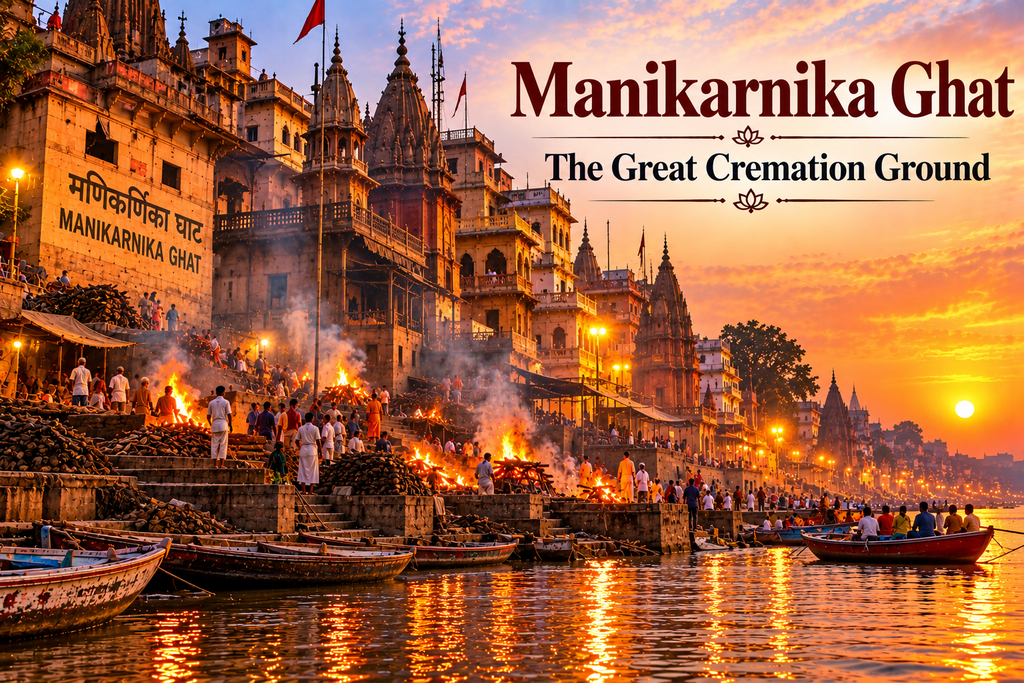
7. Manikarnika Ghat — The Great Cremation Ground
The most sacred cremation ground in the Hindu world. Visitor etiquette: absolutely no photography, do not approach the pyres, refuse anyone offering paid “access” — a well-known scam.
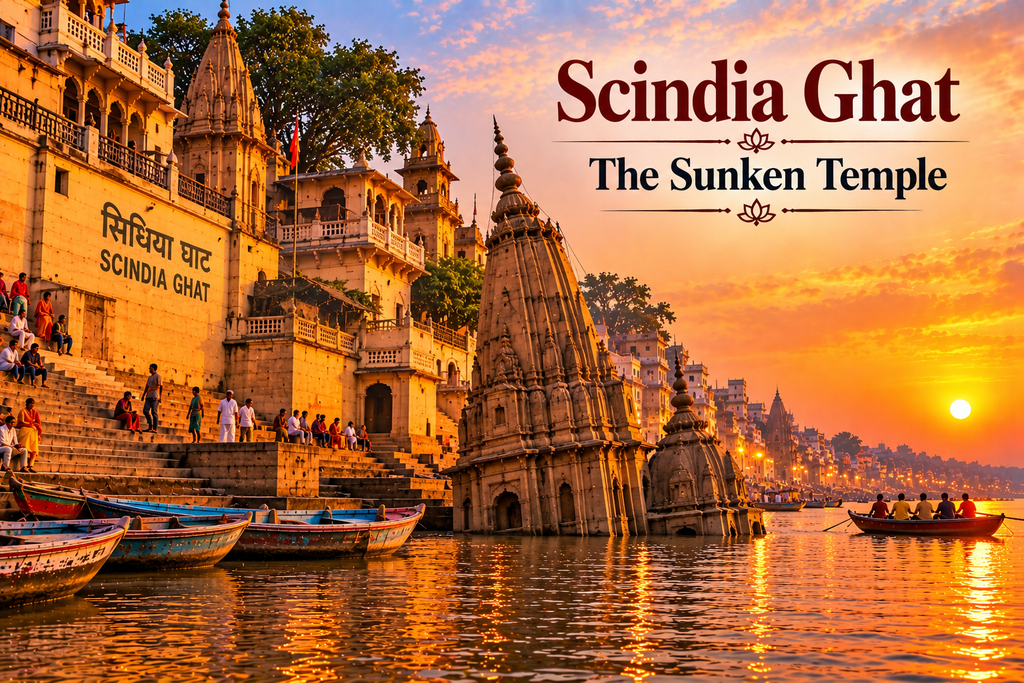
8. Scindia Ghat — The Sunken Temple
A Shiva temple partially submerged in the Ganga, tilted at an angle after sinking under its own weight roughly 150 years ago.
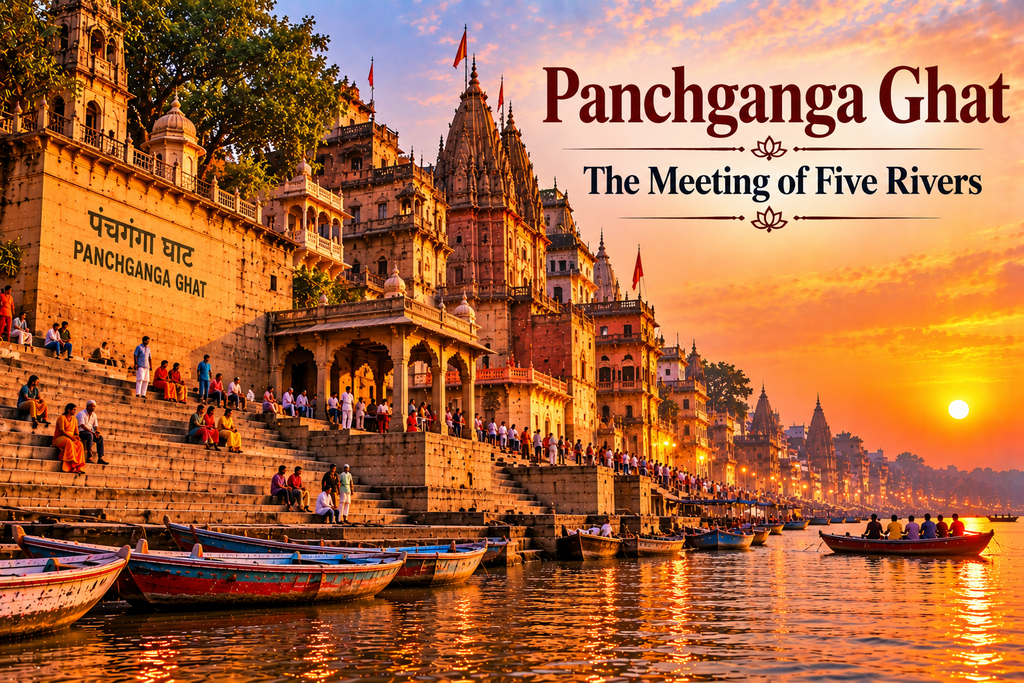
9. Panchganga Ghat — The Meeting of Five Rivers
Believed to be where five rivers converge, with the large Alamgir Mosque above it.
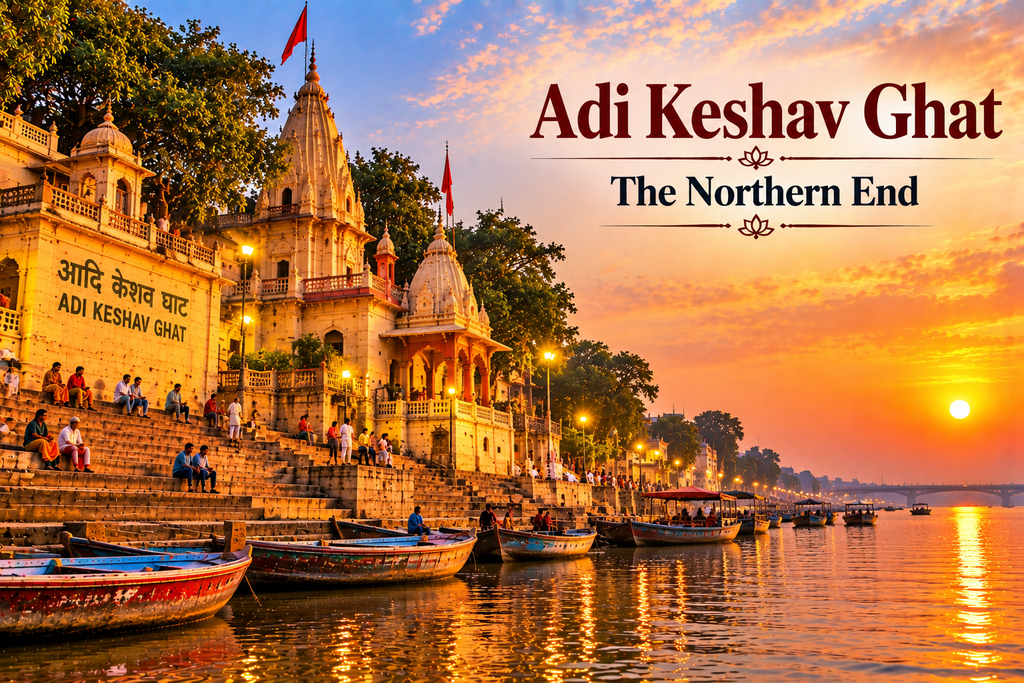
10. Adi Keshav Ghat — The Northern End
Where the Varuna river meets the Ganga, marking the northern boundary of the city.
A Suggested Ghat Walk Route
The most rewarding way to see the ghats of Varanasi is on foot at dawn, walking south to north. Start at Assi Ghat at 5:30 AM for the Subah-e-Banaras programme, then walk north past Tulsi, Harishchandra and Kedar Ghat, watching the city wake — bathers, laundry being beaten on stone, buffalo in the shallows, chai boiling in clay cups. Pause at Dashashwamedh for tea, continue past Man Mandir and its observatory, approach Manikarnika quietly and respectfully, and finish at Scindia Ghat around 8:30 AM. The full walk is about 4 km and takes three hours at a comfortable pace. During the monsoon, the lower steps flood and some stretches become impassable — in that season, do it by boat instead. The Uttar Pradesh Tourism department also publishes an official heritage walk map worth cross-checking before you set out.
Seeing the Ghats by Boat
The riverfront was built to be seen from the water. A sunrise rowboat past the ghats of Varanasi gives you the full panorama — a view essentially unchanged for two centuries. Our Varanasi Boat Ride 2026 guide covers exact timings, prices and safety details for a sunrise row past all the major ghats, from Assi in the south to Scindia in the north.
Understanding Who Built the Ghats
Most of the ghats of Varanasi were constructed or rebuilt between the 17th and 19th centuries by rulers from across India who wanted a permanent presence on the sacred riverfront. Maratha nobility, Rajput kings from Jaipur and Amber, and wealthy merchant families from Bengal and the Deccan all built ghats, palaces and temples along this stretch — which is why the skyline above the steps looks like a row of miniature kingdoms stitched together. Man Mandir Ghat, built by the Amber royal family, and Kedar Ghat, closely tied to South Indian devotional traditions, are two clear examples of this layered history.
Practical Tips for Visiting the Ghats
- Wear shoes with grip. The stone steps of the ghats of Varanasi are worn smooth and often slick with water, ash and marigolds.
- Go at dawn. The ghats between 5 and 8 AM are an entirely different city from the ghats at noon.
- Carry small change for chai and boat tips; large notes invite haggling.
- Don’t swim. Bathing is a ritual practice performed by those who know the currents, which are stronger than they look.
- Respect the akharas — the wrestling grounds near several ghats are working spaces, not tourist attractions.
- Be firm but polite with touts. A calm, repeated “no thank you” works.
- Avoid the ghats alone late at night, particularly the unlit stretches between the main ghats.
Seeing the Ghats After Dark
Many of the ghats of Varanasi take on an entirely different character after the evening Aarti crowds disperse. Small groups of musicians sometimes gather informally near Assi and Tulsi Ghat, and the temple bells continue at intervals through the night from the smaller shrines along the steps. This is a good time for a quiet walk with a guide who knows the safe, well-lit stretches — but it is not the time to explore alone or venture into the unlit lanes behind the ghats.
Photography and the Ghats of Varanasi
The ghats of Varanasi are among the most photographed subjects in India, and for good reason — the combination of stone, water, colour and light changes completely between dawn, midday and dusk. Early morning gives the softest light and the most candid human activity: bathers, boatmen, priests setting up for the day. Evening light near Dashashwamedh, just before the Aarti, turns the sandstone a deep gold. Always ask before photographing individuals at prayer, and never photograph at the cremation ghats under any circumstances, even from a distance.
Frequently Asked Questions
How many ghats are there in Varanasi? Around 84, though roughly a dozen are of major interest to visitors.
Which is the most famous of the ghats of Varanasi? Dashashwamedh Ghat, host of the evening Ganga Aarti; Manikarnika is the most spiritually significant.
Are the cremation ghats open to tourists? You may observe from a respectful distance, but photography is strictly forbidden.
What is the best time of day to visit the ghats of Varanasi? Sunrise, without question, followed by evening for the Aarti. Midday is hot and comparatively lifeless by comparison.
Can you walk between all the ghats of Varanasi? Yes, for most of the year the riverfront is walkable end to end. In monsoon, high water blocks some sections and a boat becomes the better option.
Is it safe to walk the ghats of Varanasi alone? Yes during daylight and early evening. Stick to the main, well-lit stretches after dark.
Walk the Ghats of Varanasi with Sacred Varanasi Tour
Sacred Varanasi Tour runs guided dawn walks and private rowboat tours across the ghats of Varanasi with local guides who grew up on these steps. This pairs naturally with our full Varanasi Tour Packages 2026 and Kashi Vishwanath Temple Darshan Timings guide.
Book your sunrise ghat walk or boat tour with us today.